
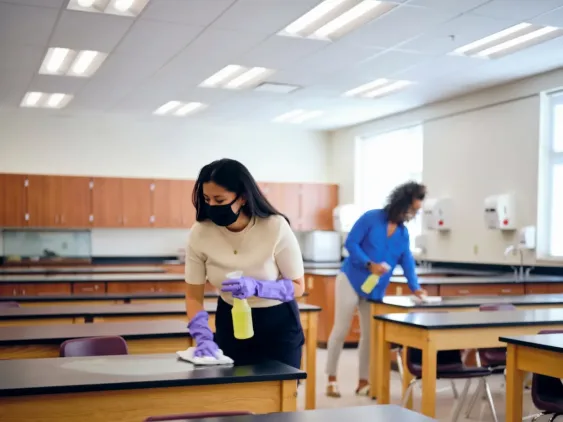
Quick Classroom Cleaning Checklist
- Daily: Desks, chairs, high-touch surfaces, floors, trash, and shared equipment
- Weekly: Deeper floor care, shelving, doors, less frequently touched surfaces, and classroom fixtures
- Monthly or periodically: Carpet care, detailed dusting, storage areas, vents, hard-to-reach surfaces, and other deep cleaning tasks
- Teachers: Basic classroom upkeep and reporting cleaning or maintenance concerns
- Custodial staff: Routine cleaning, floor care, waste removal, and assigned sanitation tasks
- Professional cleaners: Specialized or large-scale cleaning that requires additional equipment, time, or expertise
Arizona has thousands of K–12 school sites serving more than 1.1 million students through publicly funded schools. With that many classrooms, shared spaces, and daily activities to manage, it’s understandably difficult to keep up with cleanliness on top of handling the students, making lesson plans, disciplining, and so on.
That is precisely why school staff need a classroom cleaning checklist. Let’s talk about how to build one.
Why You Need a Structured Classroom Cleaning Checklist
Most schools already clean their classrooms in some form. The difference a written checklist makes is consistency. When expectations are documented, every room gets the same level of care.
- Daily tasks don’t crowd out deeper cleaning. Desks and floors may need frequent attention, while shelves, vents, storage areas, and carpets can be handled on a weekly or periodic schedule. Separating these tasks keeps the routine realistic.
- Responsibilities are easier to sort out. A school cleaning checklist can spell out what teachers are expected to handle, what belongs to the custodial team, and when outside school cleaning services may be needed.
- Missed tasks are easier to spot. If a particular area keeps getting overlooked, a checklist gives supervisors something concrete to review instead of relying on complaints.
- New staff have a clear starting point. When custodial assignments change, the classroom cleaning schedule doesn’t have to change with them. A documented checklist helps new team members understand the school’s expectations right away.
- Your team can spend its time where it matters. Organizing tasks by frequency helps schools plan labor, equipment, and cleaning time without turning every shift into a deep-cleaning session.
- The standard can follow the school, not just one classroom. For schools with multiple buildings, grade levels, or high-traffic areas, a consistent school cleaning checklist makes it easier to establish the same basic expectations throughout the facility.
Classroom Cleaning Checklists by Schedule
A practical classroom cleaning schedule divides work into daily, weekly, and monthly or periodic tasks based on how frequently different areas are used and how quickly they accumulate dirt. Here’s how each schedule may differ:
Daily Classroom Cleaning Checklist
Daily cleaning should focus on the areas that see the most activity throughout the school day. These are typically the surfaces students and staff use regularly, along with floors, waste bins, and other areas that can quickly become visibly dirty.
A typical daily classroom cleaning checklist may include:
- Emptying trash and recycling bins
- Cleaning student desks and tables
- Wiping commonly touched surfaces such as door handles and light switches
- Cleaning teacher desks and frequently used work surfaces
- Cleaning whiteboards and teaching surfaces as appropriate
- Cleaning and spot-treating floors
- Vacuuming carpeted areas or removing visible debris
- Cleaning frequently used shared equipment according to manufacturer or school procedures
- Checking sinks and other classroom fixtures where applicable
- Reporting cleaning, maintenance, or supply concerns
Desert Oasis Advice: A kindergarten room, science lab, computer classroom, and standard lecture room may have very different cleaning needs. Make sure that your checklist accounts for those differences rather than forcing every space into the same routine.
Weekly Classroom Cleaning Checklist
Weekly cleaning gives custodial teams an opportunity to address areas that may not require attention after every school day but still need regular care.
A weekly checklist may include:
- More thorough cleaning of floors and carpeted areas
- Dusting shelves, cabinets, ledges, and other accessible surfaces
- Cleaning classroom doors and frames
- Wiping less frequently touched fixtures and surfaces
- Cleaning chair legs, desk legs, and other areas that are easy to overlook
- Dusting or cleaning accessible vents and registers according to facility procedures
- Cleaning storage areas that are in regular use
- Checking corners and areas behind or underneath furniture
- Removing accumulated dust and debris from accessible areas
- Reviewing the classroom for cleaning or maintenance issues that need attention
Monthly / Periodic Classroom Deep Cleaning Checklist
Some cleaning jobs simply take more time, may require specialized equipment, or are better scheduled during less busy periods.
A classroom deep cleaning checklist may include:
- Detailed carpet cleaning or extraction
- Thorough floor care appropriate for the flooring material
- Deep cleaning of corners, edges, and areas beneath movable furniture
- Cleaning higher surfaces and accessible fixtures
- Detailed cleaning of shelves, cabinets, and storage areas
- Cleaning blinds, shades, and other window coverings where applicable
- Cleaning vents, registers, and other facility components according to building procedures
- Detailed cleaning of doors, frames, and other fixtures
- Removing built-up dust from areas that are not part of the daily routine
- Cleaning or servicing shared equipment according to manufacturer instructions
- Reviewing classrooms for items that require maintenance, repair, or specialized cleaning
Desert Oasis Advice: Periodic deep cleaning doesn’t always have to stay on your in-house team’s workload. You can get expert janitorial cleaning service to tackle tedious tasks such as carpet extraction, intensive floor care, or detailed restroom cleaning and make sure they’re done correctly.
What Areas Should You Include In Your Classroom Cleaning Checklist?
Here are the key areas to build into your classroom cleaning schedule, along with how often each one typically needs attention.
- Student Desks and Chairs – Wipe desktops, chair backs, and seats daily, and check the undersides weekly for gum, stickers, and buildup that’s easy to miss.
- Teacher Workstations – Include them in daily surface cleaning, and coordinate with teachers so papers and supplies are cleared before crews arrive.
- Whiteboards and Teaching Areas – Erase and wipe boards daily, then use a proper whiteboard cleaner weekly. Clean marker trays, podiums, and projector screens on a regular schedule as well.
- High-Touch Surfaces – These surfaces should be cleaned and disinfected daily by custodial or professional staff using approved products.
- Shared Equipment and Technology – Wipe them down weekly at minimum, using electronics-safe cleaners.
- Floors and Carpets – Sweep or vacuum daily, damp-mop hard floors weekly, and schedule periodic carpet extraction and floor scrubbing.
- Trash and Recycling – Empty all bins daily and replace liners as needed. Wash and sanitize the containers themselves weekly to prevent odors.
- Storage Areas and Shelving – Dust open shelving weekly and schedule a deeper wipe-down and organization of storage areas monthly or between terms.
Teacher Responsibilities vs. Custodial Cleaning Tasks
One of the biggest sources of confusion in school cleaning is who is responsible for what.
Teachers are focused on instruction, and they shouldn’t be expected to handle disinfecting products or other specialized cleaning. At the same time, a few simple classroom habits make custodial work faster and more effective.
Here’s how you can divide the work:
| Task Area | Teachers | Custodial / Cleaning Staff |
|---|---|---|
| Desks and chairs | Have students clear desks and stack or tuck in chairs at day’s end | Wipe down, clean, and disinfect surfaces |
| Whiteboards | Erase boards after lessons | Deep clean boards and marker trays with proper cleaners |
| High-touch surfaces | Report heavily soiled areas | Clean and disinfect handles, switches, faucets, and fixtures |
| Shared equipment | Return items to designated storage | Wipe down technology and supplies with electronics-safe products |
| Floors and carpets | Keep floors clear of clutter; report spills right away | Sweep, vacuum, mop, and handle spill cleanup |
| Trash and recycling | Encourage proper sorting in the classroom | Empty bins, replace liners, and sanitize containers |
| Storage and shelving | Keep supplies organized and accessible | Dust shelving and clean storage areas on schedule |
| Deep cleaning | Clear the room before scheduled deep cleans | Carpet extraction, floor scrubbing, vents, windows, and baseboards |
When Schools Should Consider Professional Cleaning Support
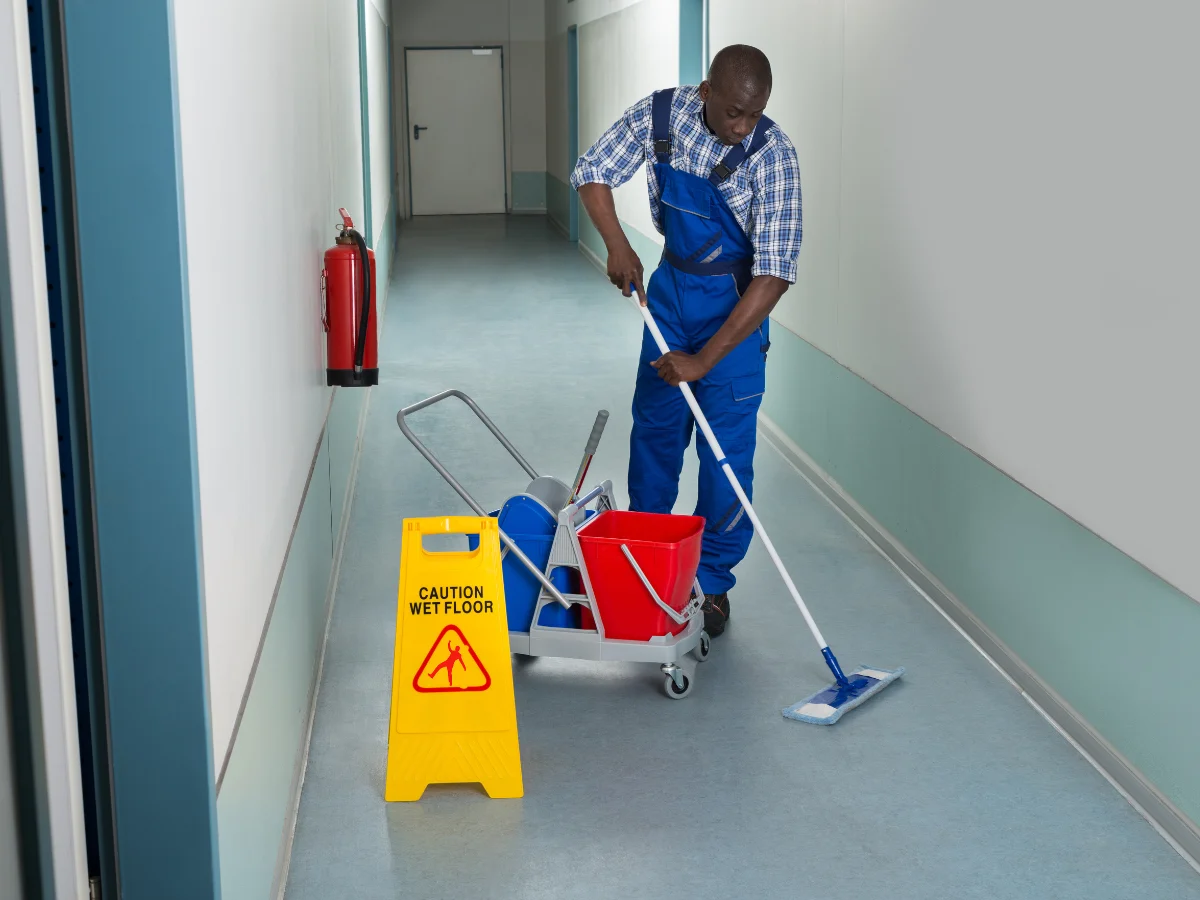 Many schools already have teachers and custodial staff sharing cleaning duties, and for some buildings, that’s enough. But as enrollment grows or standards slip, in-house teams can struggle to keep up with everything on the checklist.
Here are a few signs it may be time to bring in professional school cleaning services:
- Periodic tasks keep getting pushed back. If carpet extraction, floor scrubbing, or vent and baseboard cleaning rarely happen on schedule, your team may not have the time or equipment to keep up.
- Cleaning quality varies from room to room. Uneven results often point to understaffing, high turnover, or crews covering too much square footage.
- Teachers are picking up cleaning duties. When educators start doing responsibilities they shouldn’t have to carry.
- Your custodial team is stretched thin. Absences, open positions, or added responsibilities like event setup can leave daily cleaning incomplete.
- You need extra help at key times. Summer break, winter break, and the weeks before a new term are ideal windows for deep cleaning that daily crews can’t fit in.
- Specialized cleaning is beyond your team’s scope. Some tasks require commercial-grade equipment and trained technicians to do properly.
Can’t find time to deep clean your classroom?
At Desert Oasis Cleaners, our crews handle the deep clean on a month-to-month plan that flexes with your school year.
Frequently Asked Questions
What are five rules to keep my classroom clean?
Keep desks clear at the end of the day, put supplies back in their designated spots, throw trash in the right bins, report spills immediately, and keep floors free of backpacks and clutter. These habits don’t replace custodial cleaning, but they make it faster and more thorough.
How often should classrooms be cleaned?
Classrooms need light cleaning daily, more thorough cleaning weekly, and deep cleaning monthly or between terms.
Should teachers be responsible for cleaning their own classrooms?
No. Teachers should help keep classrooms organized, but the actual cleaning and disinfecting should be done by the custodial or professional cleaning staff.
When is the best time to schedule a classroom deep clean?
The best time is when classrooms are empty for an extended period, such as summer break, winter break, or the week before a new term. These windows give crews time for carpet extraction, floor scrubbing, and furniture moving without disrupting class schedules. For mid-year deep cleans, weekends or after-hours shifts work well.
What’s the difference between custodial staff and professional school cleaning services?
Custodial staff are school employees who handle daily classroom cleaning, often alongside maintenance, setup, and other building duties. Professional school cleaning services are outside providers focused solely on cleaning, bringing their own trained crews, commercial-grade equipment, and supplies. Many schools use both, with in-house staff covering daytime needs and a cleaning company handling after-hours routines or periodic deep cleans
Desert Oasis Cleaners: Keeping School Facilities Spotless For 20+ Years
Your teachers should be teaching, and your custodial team shouldn’t be stretched to the limit. We fill the gaps so every task on your classroom cleaning checklist gets done without adding to anyone’s workload.
- 20+ years of hands-on commercial cleaning experience
- A custom plan designed for your facility, not a one-size-fits-all package
- Scheduling that fits around your school day
- Flexible month-to-month agreements
- Professionally trained cleaning crews